7 Tips for Buying Aluminium Winding Wire?
As electricity demand rises, winding components face greater pressure to deliver efficiency, reliability, and stable performance. The International Energy Agency’s Electricity 2024 report expects global electricity consumption to keep growing through 2026. That trend makes material selection more important for transformers, motors, generators, and other electrical equipment.
Aluminium Winding Wire can reduce conductor weight and material cost, but the purchase decision requires more than comparing prices. The U.S. Geological Survey’s Mineral Commodity Summaries 2024 reported global primary aluminium production at roughly 70 million metric tons in 2023. Availability is strong, yet quality can vary between suppliers. A low quotation may hide larger diameters, weaker insulation, poor surface treatment, or incomplete testing.
This guide presents seven practical tips for evaluating suppliers and specifications. Check conductivity, resistance, diameter tolerance, enamel quality, thermal class, mechanical strength, and packaging. Confirm that the product matches applicable IEC 60317 requirements and your equipment design. Ask for batch-based inspection reports, not only a generic certificate. Look closely.
Installation details matter too. Aluminium needs suitable connections because its oxide layer can increase contact resistance. Storage also matters; moisture, dust, and damaged reels can undermine otherwise good wire. Some buyers focus only on conductivity. That is incomplete. Temperature cycling, winding tension, bend performance, and joint reliability may determine service life. No single report replaces application testing. Use recognized standards, supplier audits, and prototype validation together. That approach is slower, but usually safer and more economical.
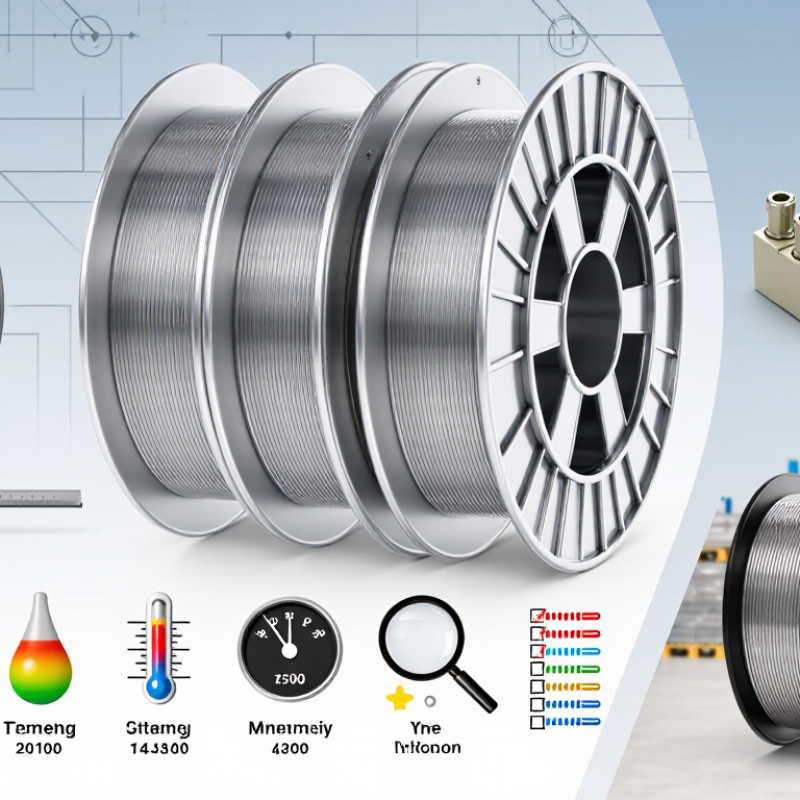
Define the Electrical and Mechanical Requirements
When buying aluminium winding wire, define electrical requirements before comparing prices. Record rated current, operating voltage, frequency, and expected winding temperature. Aluminium conducts less efficiently than copper, so the wire may need a larger cross-section. Specify the conductor diameter, resistance at 20°C, conductivity range, and allowable resistance change during operation. Insulation thickness and thermal class must match the motor or transformer design. Do not rely on a general “high quality” description.
Mechanical requirements deserve equal attention. Check tensile strength, elongation, flexibility, springback, and the minimum safe bending radius. A wire that measures correctly may still crack during tight coil winding. For example, a 1.2-millimeter conductor passing through a narrow slot needs controlled tension and smooth guides. Confirm whether the wire will be enamelled, wrapped, or both. Aluminium oxide can affect crimping, welding, and terminal stability, so connection methods should be tested with the actual wire.
Ask for dimensional reports, resistance data, insulation adhesion results, and batch traceability. Inspect several coils, not only one sample. In production, we once focused heavily on conductivity and overlooked enamel scuffing near a guide point. That small defect caused unnecessary rework. It was a useful reminder: electrical compliance does not prove winding reliability. A practical trial should measure temperature rise, insulation breakdown, joint strength, and winding appearance under real operating tension.
7 Tips for Buying Aluminium Winding Wire: Define the Electrical and Mechanical Requirements
Use the chart below as a practical reference when comparing conductor materials. Aluminium has approximately 61% of copper’s conductivity by the International Annealed Copper Standard (IACS), so an aluminium conductor generally requires a larger cross-sectional area to achieve similar electrical resistance.
Key Buying Requirements
- Define conductivity: Verify the minimum conductivity or maximum resistivity at 20°C.
- Calculate conductor size: Allow for aluminium’s lower conductivity when selecting the cross-sectional area.
- Check current capacity: Confirm the required ampacity under the actual temperature and installation conditions.
- Specify tensile strength: Select a temper and alloy that can withstand winding, handling, and termination forces.
- Confirm elongation: Adequate elongation helps reduce breakage during drawing and coil winding.
- Review diameter tolerance: Tight dimensional control supports consistent winding fill and insulation coverage.
- Verify surface quality: The wire should be free from cracks, scratches, oxide contamination, and other defects that may reduce insulation reliability.
Reference values: Annealed copper is assigned 100% IACS, while commercially pure electrical aluminium is commonly specified at approximately 61% IACS. The corresponding resistivity values at 20°C are about 0.01724 Ω·mm²/m for copper and 0.02826 Ω·mm²/m for aluminium.
Choose the Right Aluminium Grade and Wire Temper
7 Tips for Buying Aluminium Winding Wire?
The aluminium grade affects conductivity, strength, and long-term winding stability. Electrical grades such as 1350 offer high conductivity for transformer and motor windings. Some 8000-series alloys provide better mechanical strength, but their conductivity can be lower. Check the datasheet instead of trusting a sales description. A small grade difference can increase resistance and operating heat.
Temper describes how much the wire has been cold-worked. Soft, annealed aluminium bends easily around tight corners and reduces cracking during coil formation. Harder tempers resist deformation and can improve dimensional control, but they may spring back during winding. That matters when the wire passes through a narrow guide or forms a compact rectangular turn. Choose based on the winding machine, bend radius, and required tensile strength.
Ask for conductivity, tensile strength, elongation, diameter tolerance, and temper records. Test a sample at 20°C when possible. Also inspect the surface under good light. Scratches, flattened sections, or inconsistent diameter can damage insulation and create uneven winding tension. A practical check is simple: wind several turns, measure the finished coil, and compare its resistance with the design value. Do not ignore small deviations. I have seen specifications look correct while the chosen temper caused excessive springback. That mistake is easy to miss until production begins.
Verify Standards, Testing, and Supplier Credentials
Rising grid demand makes winding-wire quality harder to ignore. The IEA’s Electricity 2024 report forecasts global electricity demand growth of about 3.4% annually from 2024 to 2026. More transformers will be built, but faster purchasing can hide weak verification. Check whether the wire follows IEC 60317-0-3 for enamelled round aluminium wire, ASTM B800 for 8000-series aluminium conductors, or another clearly stated specification. Do not accept “international standard” as a complete answer.
Ask for the exact alloy, temper, diameter tolerance, insulation class, and coating type. Then request batch-level test results. Useful records include resistance at 20°Celongationadhesionspringbackdielectric breakdown voltage. The report should show test methods, equipment identification, sampling quantity, and dates. An ISO/IEC 17025-accredited laboratory adds confidence, though accreditation alone does not prove every result. Small detail. Check the scope.
Supplier credentials require similar care. Review the ISO 9001 certificate scope, production address, calibration records, and certificate-of-conformity process. Confirm that heat numbers and spool labels trace back to raw-material records. The International Aluminium Institute reports that recycling aluminium requires roughly 5% of the energy used for primary production, making recycled content relevant, but it must not replace electrical-performance evidence. A supplier may provide impressive certificates and still offer poor documentation. Request a retained sample, inspect the winding surface under bright light, and compare measured resistance with the quoted value before approving a large order.