© 2025 Messer Cutting Systems, Inc.

Choosing the right vacuum packaging begins with understanding how meat moves through your supply chain. For wholesale buyers, Vacuum Bags Meat must protect texture, color, and freshness during processing, storage, and transport. The best option is not always the thickest bag or the lowest-priced carton. Performance depends on film structure, seal strength, oxygen barrier, puncture resistance, and storage temperature.
A reliable purchasing decision should reflect real production conditions. Beef cuts with sharp bones may require stronger puncture resistance than trimmed poultry portions. Frozen products need films that remain flexible below zero. Fresh meat may need dependable sealing around moisture and fat. During supplier evaluation, request material specifications, thickness data, food-contact documentation, and sample testing. A practical trial can reveal leaks that product brochures do not mention.
Small details matter.
Experienced buyers should also review carton consistency, printing accuracy, minimum order quantities, and delivery reliability. A bag that seals well in one machine may perform poorly on another. Test it under your actual vacuum level and sealing temperature. This step is easy to skip, and that can become an expensive lesson. Certifications should be checked against the destination market, because requirements can differ between regions. Supplier claims deserve verification, not blind trust. This guide compares important bag types, material choices, and purchasing factors for 2026. It aims to help meat processors, distributors, and private-label buyers make informed decisions. There is no universal winner. The right bag balances safety, efficiency, cost, and dependable performance across everyday wholesale operations.
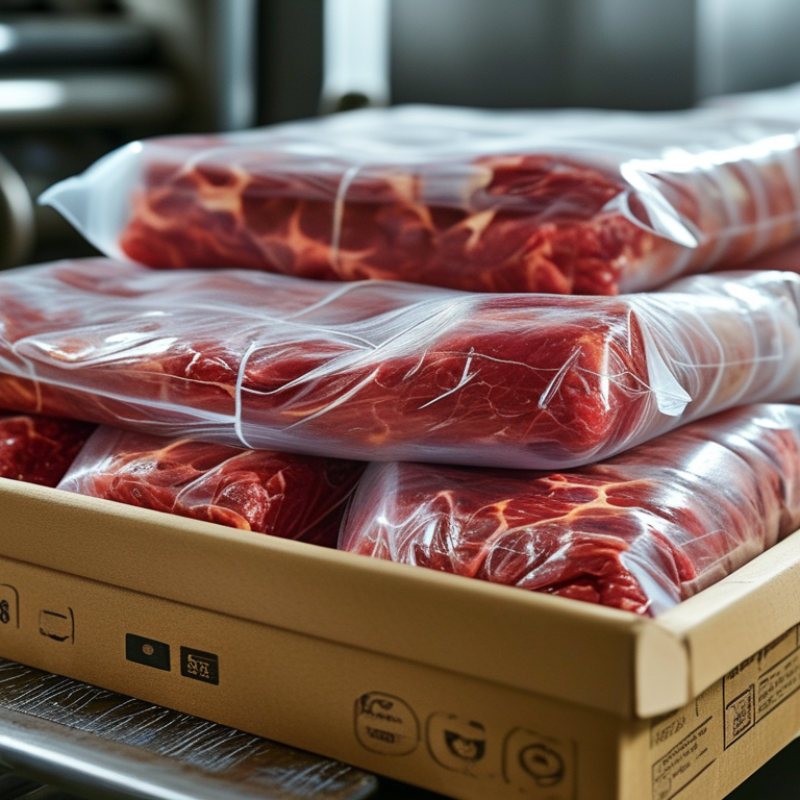
2026 Best Vacuum Bags for Meat Wholesale Buyers
Understanding Meat Vacuum Bag Materials and Barrier Performance
Material selection affects shelf life, seal reliability, and product appearance. PA/PE coextruded bags remain practical for chilled meat. Nylon provides puncture resistance, while polyethylene forms the heat seal. High-barrier structures may add EVOH or other oxygen-resistant layers. However, barrier performance can drop after flexing, punctures, or poor sealing.
Oxygen transmission rate (OTR) and water vapor transmission rate (WVTR) should guide purchasing decisions. Test results should follow ASTM D3985 and ASTM F1249 methods. Lower values usually indicate stronger protection. FAO’s 2019 State of Food and Agriculture reports that 14% of food is lost between harvest and retail. Packaging cannot solve every loss, but oxygen control and durable seals can reduce avoidable quality damage. A practical test is still essential. Fill bags with real cuts, bone edges, and purge.
Tips: Request OTR and WVTR data at stated temperature and humidity. Check seal strength after refrigeration. Compare puncture resistance, not only thickness. A thicker bag may still perform poorly if its seal design is weak. Review storage conditions honestly. My own caution: laboratory results often look better than warehouse handling. Temperature swings, rough cartons, and rushed sealing can change the outcome. Choose the structure that survives actual distribution, not merely the best brochure number.
Comparative guide to common vacuum-bag structures, barrier properties, processing suitability, and wholesale purchasing considerations.
| Bag Structure | Typical Layer Construction | Typical Thickness | Oxygen Barrier OTR* | Moisture Barrier WVTR* | Puncture Resistance | Recommended Meat Applications | Wholesale Buying Notes |
|---|---|---|---|---|---|---|---|
| Standard PA/PE Coextruded | Polyamide skin layers with a polyethylene sealing layer | 70–150 μm | Approximately 20–80 cc/m²/day | Approximately 2–8 g/m²/day | Good | Fresh beef, pork, lamb, poultry, and routine chilled meat portions | A practical balance of cost, clarity, flexibility, and sealing reliability for high-volume orders. |
| High-Barrier PA/EVOH/PE Coextruded | Polyamide outer layers, ethylene-vinyl alcohol barrier core, polyethylene sealant | 80–160 μm | Typically below 1–5 cc/m²/day | Approximately 1–6 g/m²/day | Good to very good | Longer-distribution chilled meats, sliced meats, cured products, and oxygen-sensitive items | EVOH provides excellent dry oxygen resistance but becomes less effective at high humidity; verify the complete multilayer structure. |
| PA/PE with Enhanced Sealant Layer | Polyamide support layers with a modified polyethylene or ionomer-based sealing layer | 80–160 μm | Approximately 15–70 cc/m²/day | Approximately 2–8 g/m²/day | Very good | Bone-in cuts, sharp-edged portions, marinated meat, and products requiring stronger seals | Suitable where seal contamination from meat juices or fats is a frequent production problem. |
| PET/PE Laminated | Oriented polyester outer film laminated to a polyethylene sealing layer | 70–140 μm | Approximately 1–10 cc/m²/day | Approximately 0.5–4 g/m²/day | Good | Retail-ready portions, printed packs, processed meats, and applications needing a stiff, glossy appearance | Offers strong printability and presentation; confirm flexibility and forming requirements before ordering. |
| High-Barrier PET/EVOH/PE | Polyester outer layer, EVOH barrier layer, and polyethylene sealant | 80–160 μm | Typically below 1–5 cc/m²/day | Approximately 0.5–4 g/m²/day | Good to very good | Premium chilled products, export distribution, and packs requiring high oxygen protection with printed graphics | Select when shelf-life and visual presentation justify a higher material cost; validate seal strength after refrigeration. |
| Shrink Vacuum Bag | Multilayer PA/PE or PA/EVOH/PE film designed for post-packaging shrink | 70–120 μm | Approximately 5–50 cc/m²/day | Approximately 1–7 g/m²/day | Good to very good | Primals, subprimals, bone-in cuts, ham, and irregular products where close conformity is valuable | Requires compatible shrink equipment and controlled hot-water or steam processing; inspect for post-shrink stress. |
| Bone-In Reinforced Vacuum Bag | Heavy-gauge multilayer PA/PE or PA/EVOH/PE with reinforced puncture-resistant design | 120–200 μm | Approximately 10–70 cc/m²/day | Approximately 2–8 g/m²/day | Excellent | Bone-in beef, lamb racks, poultry portions, game meat, and products with sharp contours | Higher material usage can reduce leakage, rework, and product loss; test with the actual bone profile. |
Technical Notes for Wholesale Buyers
2026 Best Vacuum Bags for Meat Wholesale Buyers
Choosing the right vacuum bag starts with the meat’s shape, moisture, and handling conditions. Smooth chamber bags suit boneless steaks, fillets, and trimmed portions. Their flat surface helps remove air evenly. For minced meat, use bags with strong seals and suitable thickness. Loose particles can weaken the sealing area.
Bone-in cuts need more protection. A puncture-resistant bag, or a bag with an internal bone guard, reduces leaks during loading and transport. Sharp edges still require careful trimming. For marinated meat, choose a high-barrier structure with reliable seal performance. Liquid can travel into the seal. This causes avoidable failures. Double sealing may help, but it slows packing.
Frozen products need bags that remain flexible at low temperatures. A brittle film can crack when cartons move or stack. Fresh meat usually benefits from clear, oxygen-resistant material that limits discoloration. Measure the product before ordering. Oversized bags waste film and increase air-removal time. Undersized bags create stress around corners. Wholesale buyers should test several thicknesses with real cuts, not empty samples. Packing trials often reveal weak seals, trapped air, or difficult opening. No bag is perfect. We once changed a specification after finding that a thicker film handled bones better but reduced packing speed. Small production tests are worth the effort.
For wholesale meat buyers, vacuum bag selection starts with thickness, not appearance. A 70–90 micron bag may suit boneless cuts, while bone-in products often need stronger material. Thicker film resists punctures during loading, stacking, and transport. However, excessive thickness can increase cost without improving protection. It is easy to over-specify.
Size affects both yield and sealing reliability. Choose a bag that leaves enough headspace for a clean seal, but avoid excessive empty film. A loose bag can trap air in corners and waste carton space. Measure the longest cut, then allow room for closure equipment and product movement. Test several sizes with real portions. Laboratory assumptions often fail on busy packing lines.
Seal quality deserves close inspection. A consistent seal should remain flat, continuous, and free from meat juices or fat. Double seals can add security, especially for long-distance distribution, but they require proper heat settings. Compatibility also matters. Chamber systems generally handle liquid-rich products efficiently, while external suction systems may need structured bags and drier surfaces. Confirm the film works with your machine, sealing temperature, and storage method. A bag that performs well at packing may still crack after freezing. Trial samples should be chilled, frozen, stacked, and reopened before approval. This step takes time, yet it exposes weak seams and misleading claims.
Evaluating thickness, size, seals, and packaging compatibility
Common commercial ranges are approximately 76 μm for boneless meat, 102 μm for bone-in products, and 127 μm for frozen distribution where puncture and abrasion risks are higher.
Select a bag that provides roughly 8–10 cm of total headspace for product loading, evacuation, and a reliable seal without excessive unused film.
A practical wholesale specification is an 8–10 mm seal width. PA/PE coextruded bags are commonly compatible with chamber vacuum machines and chilled or frozen meat packaging.
The chart uses representative commercial specification points for wholesale comparison. Final selection should be verified through product trials, sealing-machine settings, and applicable food-contact requirements.
Wholesale meat buyers should compare vacuum bags by landed performance, not unit price alone. The Flexible Packaging Association reported US flexible packaging sales of about $40.2 billion in 2023, showing a large and competitive supply base. Competition helps pricing, but specifications still vary sharply.
For fresh and frozen meat, check film thickness, puncture resistance, seal strength, and oxygen transmission rate. A useful bag should survive bone edges, cold storage, and rough carton handling. Request production samples and test them on your own sealing equipment. The wrong seal temperature can create leaks. That detail is easy to miss. Ask for food-contact declarations, migration testing, lot traceability, and a current certificate of analysis. Depending on the market, documentation may reference FDA 21 CFR requirements, EU food-contact rules, or BRCGS Packaging Materials certification.
Pricing should include bags, freight, customs, inspection, rejected units, and emergency replenishment. A lower quotation can become expensive after leakage claims. PMMI packaging research consistently identifies labor efficiency, shelf life, and automation as major pressures in meat processing. Bags with stable dimensions and reliable sealing can reduce line interruptions, even when their purchase price is slightly higher.
Supply reliability deserves written evidence. Review average lead time, minimum order quantity, safety-stock options, and backup production capacity. Ask whether resin shortages affect allocation. I would also compare two approved suppliers, not one. This adds administration, but one missed shipment can disrupt weekly production. Supplier scorecards should track defect rates, on-time delivery, documentation accuracy, and complaint response time. Perfect forecasts are unrealistic. Recheck assumptions each quarter.
A reliable supplier should provide more than attractive pricing. Ask for film structure, thickness, seal strength, and oxygen transmission data. For fresh meat, barrier performance protects color, aroma, and shelf life during chilled transport. Confirm whether the bag suits bone-in cuts, minced meat, or processed portions.
Request samples from several production batches. Test them with your actual vacuum equipment, sealing temperature, and packing speed. A bag may perform well in a supplier’s test room but fail around sharp bones or uneven product edges. Check puncture resistance by handling packed cuts during loading and stacking. Small leaks can appear hours later.
Food-contact documentation must be current and traceable. Ask for material declarations, batch codes, migration test reports, and a clear complaint procedure. Supplier audits should review hygiene controls, storage conditions, and corrective actions. Keep records of delivery accuracy and seal failures, not only laboratory results. I have seen buyers overlook carton moisture and roll damage. That mistake is costly.
Do not select the thickest film automatically. Extra material can increase waste without improving performance for every product. Compare total cost per packed kilogram, not just price per bag. Discuss custom sizes only after measuring product dimensions carefully. Leave a small margin for sealing. Suppliers should explain limitations honestly, including temperature ranges and recommended storage periods. Good cooperation matters. Procurement teams should review the checklist each season, because equipment, meat formats, and transport conditions can change.
© 2025 Messer Cutting Systems, Inc.