How to Choose AC/DC Solar Surface Pumps at the 139th Canton Fair?
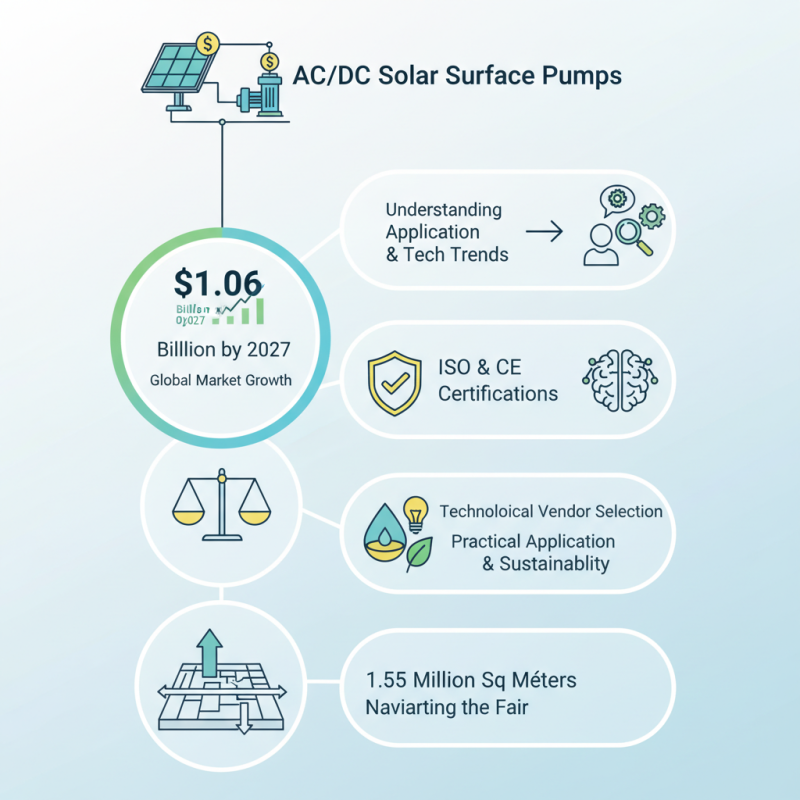
The 139th Canton Fair presents a unique opportunity for businesses exploring the potential of AC/DC Solar Surface Pumps. With the global market for solar pumps projected to reach $1.06 billion by 2027, according to a recent market analysis, the demand for efficient and sustainable pumping solutions is undeniable. Industry expert Dr. Emma Liu noted, “Selecting the right pump involves understanding both the application's needs and the technology trends shaping our industry.”
The integration of innovative technologies at the Canton Fair will further enhance buyer experiences. The introduction of AI-driven features can help streamline vendor selection. Manufacturers with ISO and CE certifications will be highlighted, ensuring quality and reliability in the decision-making process. Yet, potential buyers must critically evaluate each supplier's offerings. Not all products meet the evolving demands of sustainability.
Navigating the expansive 1.55 million square meters of exhibition space can be daunting. While the AI navigation tools aim to improve efficiency, buyers must still remain proactive in their search for the best AC/DC Solar Surface Pump options. With the backdrop of an ever-evolving industry, the challenge is to strike a balance between technological innovation and practical application.
Understanding the Basics of AC/DC Solar Surface Pumps and Their Applications
AC/DC solar surface pumps are essential tools for various applications. They harness solar energy to provide cost-effective water solutions. These pumps can be used in agriculture, landscaping, and even domestic water supply. Understanding how they operate is crucial for making informed choices.
When selecting a pump, consider its power source. AC/DC options give flexibility. Some systems only run on direct solar power. Others may operate on electricity from the grid when sunlight is insufficient. This versatility can be advantageous but also creates complexity. Who needs to think about the balance between solar and grid power?
Examine pump specifications closely. The flow rate, head height, and efficiency ratings matter significantly. A pump with a high flow rate may not be efficient if it cannot maintain consistent pressure. This discrepancy is often overlooked. Users might rush the selection process without understanding their site requirements. Each application is unique, and what works for one may not work for another. Always reflect on these factors to avoid costly mistakes.
Key Specifications to Consider When Selecting Solar Surface Pumps
Choosing the right AC/DC solar surface pump at the 139th Canton Fair requires careful thought on several key specifications. Start with the pump's capacity. Consider your water source and how much water you need to move daily. Check the flow rate and ensure it aligns with your requirements. Remember, a pump that’s too powerful may waste energy.
Power options are crucial. AC pumps are reliable but may need grid access. DC pumps are great for remote locations as they run directly from solar panels. Assess your setup. Do you have enough solar panels to support the chosen pump? That’s a common mistake.
Tips: Pay attention to the materials used in the pump. Corrosion resistance can make a significant difference in longevity. Also, consider maintenance requirements. Some pumps are easier to maintain than others. Test the noise level, especially if it's for residential use. A quiet pump can enhance your experience, while a noisy one may cause complaints. Not all pumps perform equally, so researching can prevent frustrating decisions.
Comparative Analysis: AC vs. DC Solar Surface Pumps Performance Metrics
When selecting AC or DC solar surface pumps during the 139th Canton Fair, performance metrics are crucial. AC pumps typically excel in efficiency but can be pricier. They're ideal for larger installations. In contrast, DC pumps are more affordable and energy-efficient. They suit smaller applications, such as residential use.
Understanding the specific needs of your project is vital. Do you prioritize initial cost or long-term savings? If you have access to AC power, it might be the better choice. However, if you're off-grid, a DC pump could be the solution.
Tips: Evaluate pump flow rates and head heights carefully. Look for models that offer adjustable settings to ensure flexibility. Always read customer reviews to gain insights into real-world performance. Remember, what works for one project may not suit another. Balancing price and performance requires attention and thought.
Performance Metrics of AC vs. DC Solar Surface Pumps
Market Trends and Innovations in Solar Surface Pump Technology
At the 139th Canton Fair, the focus on solar surface pumps reveals exciting trends and innovations. As demand for sustainable energy grows, solar surface pumps are evolving. Many manufacturers are now integrating advanced technology to increase efficiency and performance. For instance, new models feature improved solar panels that capture energy more effectively, even in low-light conditions. These advancements enable the pumps to operate longer and pump more water with less energy.
Another key trend is the emphasis on user-friendly designs. Some products now come with smart technology that allows for remote monitoring. This is particularly useful for farmers or individuals who manage remote water sources. However, not all designs are perfect. Some users report issues with reliability under extreme weather conditions. It's essential to assess whether the innovations truly meet practical needs.
In terms of market availability, products vary widely in features and pricing. This can make it challenging to make informed choices at the fair. Interestingly, while some pumps boast cutting-edge technology, others stick to simpler, classic designs. Many buyers get overwhelmed with options. Reflecting on personal priorities, such as budget and intended use, becomes crucial in the decision-making process.
Evaluating Cost Efficiency and ROI for Solar Surface Pump Systems
When evaluating the cost efficiency and ROI for solar surface pump systems, various factors come into play. The initial investment in solar surface pumps can seem high. However, reports indicate that these systems reduce long-term operational costs significantly. For instance, a study revealed that solar pumps can decrease energy costs by up to 80%. This substantial saving enhances the overall ROI, making solar pumps a viable option for many users.
Additionally, the lifespan of solar pumps contributes to their financial attractiveness. Many systems can operate effectively for over 20 years with minimal maintenance. This longevity, paired with lower energy expenses, often means that users recoup their initial costs within five years. According to industry analyses, 60% of users report that they exceed their expected ROI in this timeframe. Yet, it’s essential to carefully assess local solar insolation levels and specific water needs, as these factors can skew initial projections. It’s easy to underestimate their impact, leading to potential budget miscalculations later.
Installation costs can also vary widely based on location and expertise required. Thus, seeking multiple quotes can help ensure cost-effectiveness. A comprehensive understanding of all expenses is crucial. Options like government incentives may further enhance affordability. However, be cautious about hidden costs that can arise. Research shows that many consumers find themselves surprised by installation and maintenance fees.