© 2025 Messer Cutting Systems, Inc.

Choosing PUR Block Foam for global sourcing requires more than comparing prices. Buyers must connect foam performance with its final application, production process, and delivery conditions. A sofa cushion may need different resilience from packaging inserts or acoustic panels. Density, hardness, cell structure, compression set, and recovery rate should be documented clearly. Small specification gaps can become visible after cutting. They may also affect comfort, waste, and warranty claims. No sourcing plan is flawless. That is worth admitting early.
Experienced buyers usually request representative samples, technical data sheets, and recent test results. They compare samples under realistic pressure, temperature, and humidity conditions. A supplier’s factory capability matters as much as its sales response. Review mixing equipment, block curing areas, cutting accuracy, quality records, and batch traceability. Ask how the supplier handles color variation, odor concerns, and delayed shipments. Independent testing can strengthen confidence when performance is commercially important. Certifications should be checked against the destination market and the product’s intended use. Documents alone are not proof.
Global purchasing also depends on practical details. Confirm block dimensions, packaging methods, container utilization, lead times, and replacement procedures. Request a pre-production sample before approving a large order. Keep agreed tolerances in writing. A low unit price may hide higher trimming loss or inconsistent recovery. Suppliers should explain limitations instead of promising perfect results. Buyers should challenge their own assumptions, too. A foam that performs well in one climate may behave differently elsewhere. Careful comparison, transparent evidence, and ongoing communication create a more reliable PUR Block Foam sourcing decision.
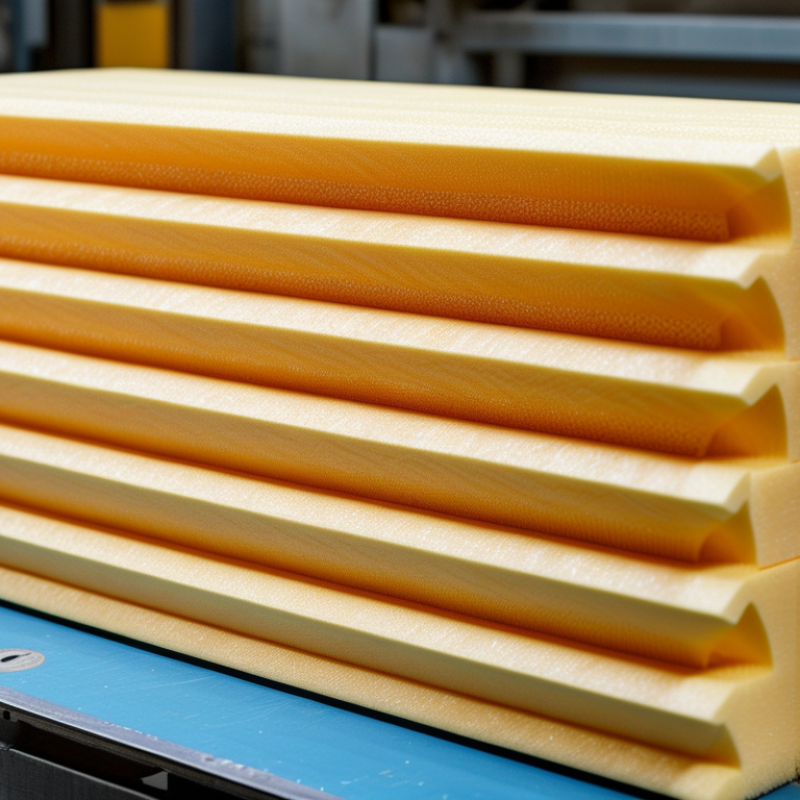
How to Choose PUR Block Foam for Global Sourcing?
Flexible PUR block foam is usually supplied as large buns, then cut into sheets or profiles. Conventional foam offers balanced softness, airflow, and cost for furniture and packaging. High-resilience foam recovers faster and supports repeated seating. Viscoelastic foam responds slowly to body pressure and reduces motion transfer. Reticulated foam has an open, net-like structure for filtration, cushioning, and airflow applications.
Start with the performance target, not the foam name. Density affects weight, durability, and material usage. Hardness, often measured by indentation force, controls the hand feel and support level. Check resilience for recovery speed. Review tensile strength, tear strength, and elongation when the foam will be cut or bonded. Compression set matters under cushions that stay loaded for long periods. Cell size also changes airflow, surface feel, and cutting quality.
Request samples from several production lots. Test them under the same temperature and humidity conditions. A certificate alone is not enough. Ask for density, hardness, compression set, and aging data, plus the relevant test methods. Inspect sliced surfaces for uneven cells, discoloration, voids, or edge collapse. Packaging can quietly damage foam during long transport. Specify compression limits and storage conditions. I have seen a foam pass an initial test but soften after heat exposure. That result deserves investigation, not excuses. A clear specification should include acceptable tolerances, because “soft” and “firm” mean different things across markets.
| PUR Block Foam Type | Typical Chemistry / Structure | Typical Density (kg/m³) | Hardness Range (ILD/IFD, kPa) | Resilience / Recovery | Airflow & Moisture Behavior | Typical Applications | Global Sourcing Considerations |
|---|---|---|---|---|---|---|---|
| Standard Polyether Foam | Polyether polyol-based, open-cell flexible PUR with general-purpose cell structure. | 15–55 | 0.8–6.0 | Moderate to good; commonly selected where balanced softness and durability are required. | Generally good air permeability; relatively good resistance to hydrolysis and humid environments. | Furniture cushions, mattresses, packaging, acoustic padding, automotive interior components. | Confirm density tolerance, compression set, flammability requirements, roll or block dimensions, and packing compression ratio. |
| Polyester Foam | Polyester polyol-based open-cell PUR; typically offers higher tensile and tear strength than many standard polyether grades. | 18–60 | 1.0–7.0 | Moderate; firmness and mechanical strength can be high, depending on formulation. | Good air permeability; generally more sensitive to hydrolysis than polyether foam, especially in hot and humid conditions. | Industrial filtration, gaskets, automotive parts, technical padding, sound absorption. | Request hydrolysis-resistance data for humid climates and validate long-term strength retention before outdoor or marine use. |
| High-Resilience (HR) Foam | Modified flexible PUR with higher support factor and elastic response than standard foam. | 30–60 | 1.5–6.0 | Typically high; ball rebound is often about 45–65%, depending on grade and test method. | Open-cell structure normally provides good ventilation and faster recovery after loading. | Premium seating, office chairs, mattresses, upholstered furniture, ergonomic products. | Compare support factor, fatigue loss, compression set, and firmness retention rather than density alone. |
| Viscoelastic / Memory Foam | Temperature- and time-sensitive flexible PUR with slow recovery and pressure-relieving behavior. | 40–95 | 0.5–4.0 | Low rebound and slow recovery; response changes with temperature and loading rate. | Usually less ventilated and more heat-retentive than conventional high-resilience foam unless modified with ventilation features. | Mattress comfort layers, pillows, medical support surfaces, vibration-damping components. | Specify test temperature, recovery time, indentation force deflection, odor limits, and aging performance. |
| Reticulated Foam | Open-cell PUR in which cell windows are removed or enlarged to create a highly interconnected skeleton. | 20–60 | 0.5–4.0 | Moderate; selected primarily for permeability and controlled flow rather than seating comfort. | Very high air, water, and fluid permeability; cell count and reticulation level strongly affect flow resistance. | Air and liquid filtration, acoustic treatment, airflow control, cleaning sponges, protective packaging. | Define pores per inch, pressure drop, filtration efficiency, fluid compatibility, and dimensional stability. |
| Flame-Retardant PUR Foam | Flexible PUR formulated with flame-retardant additives and/or combustion-modifying chemistry. | 20–60 | 1.0–6.0 | Varies by formulation; additives may influence resilience, odor, density, and compression set. | Air permeability is generally retained, but smoke, burn behavior, and emissions must be evaluated for the intended market. | Transport seating, furniture, bedding, building interiors, public-space upholstery. | Specify the exact regulatory test and product assembly; test certificates are not automatically transferable between constructions. |
| Antimicrobial / Specialty Foam | Flexible PUR containing an antimicrobial treatment or specialized additive package for a defined end use. | 20–70 | 1.0–7.0 | Depends on the base foam; additive loading may affect feel and durability. | Normally open-cell and breathable; treatment effectiveness depends on the organism, exposure, and test protocol. | Healthcare products, hygiene-sensitive seating, filtration, footwear, and technical cushioning. | Verify permitted chemical substances, migration requirements, efficacy claims, labeling rules, and local regulatory compliance. |