© 2025 Messer Cutting Systems, Inc.

Choosing the top U Panel Machine for global buyers in 2026 is not simply a matter of selecting the fastest model. It requires a careful comparison of panel quality, production stability, energy use, automation, service support, and long-term operating costs. A machine may look impressive in a showroom. Its performance can change under dust, heat, humidity, or uneven operator training.
Michael J. Lee, an independent industrial packaging machinery consultant, explains, “The best U Panel Machine is the one that delivers consistent panels after installation, not just attractive specifications before purchase.” This practical view deserves attention. Buyers should inspect forming accuracy, welding strength, hydraulic response, control-system reliability, and material compatibility. They should also ask for documented output data from comparable factories. Numbers without conditions can mislead.
Small details matter. Can operators replace wear parts without stopping production for hours? Does the supplier provide remote diagnostics, training, manuals, and local technical support? What happens when a sensor fails during a weekend shift? These questions often reveal more than a polished product brochure.
There is no universal winner. A high-speed machine may suit a large manufacturer, while a simpler system may serve a growing regional plant better. This distinction is easy to overlook. Global buyers must consider container dimensions, installation requirements, voltage standards, spare-parts access, and after-sales response times. Even experienced purchasers can misjudge total ownership costs. This guide examines the leading U Panel Machine options for 2026, using practical performance criteria rather than marketing claims alone.
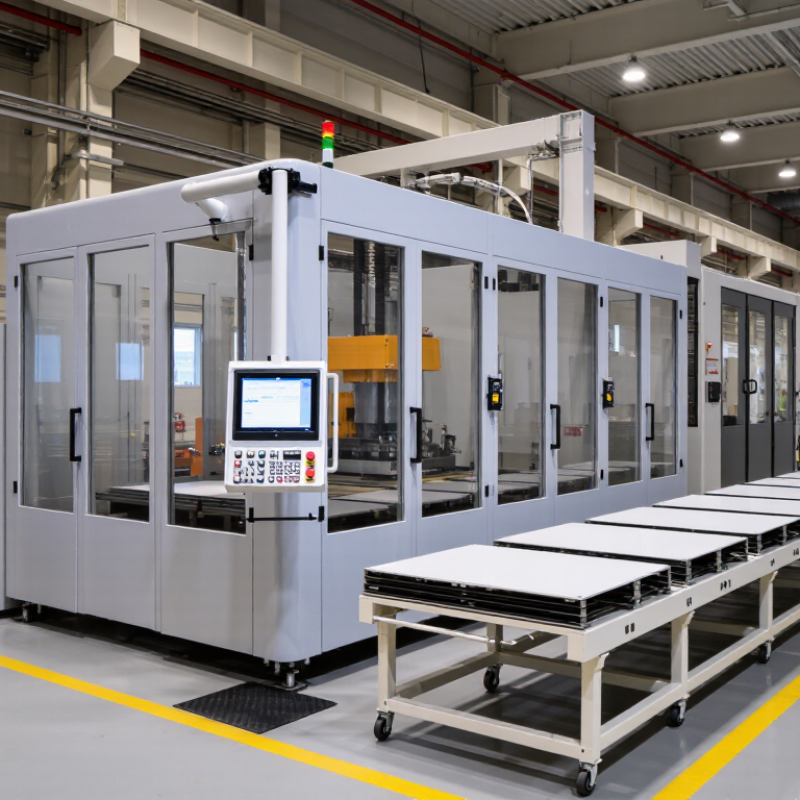
A U panel machine produces flexible intermediate bulk containers, commonly called FIBCs. It joins a long U-shaped fabric panel with two flat side panels. The result resembles a large fabric sleeve with a sewn bottom and lifting loops.
Mordor Intelligence estimates the global FIBC market at about USD 6.5 billion in 2024, with continued growth expected through 2030. That demand increases pressure on manufacturers to improve consistency. A U panel machine typically unwinds woven polypropylene fabric, measures and cuts each panel, then guides the pieces through synchronized sewing stations. Operators may add filling spouts, discharge openings, lifting loops, and dust-proof seams. Some lines use sensors to monitor fabric tension and stitch alignment.
The machine is not simply a faster sewing table. It controls dimensions, seam placement, and repeatability across hundreds of bags. A skilled operator still matters. Bad fabric tension can create wrinkles, uneven corners, or weak seams. Perfect speed claims mean little without reliable inspection.
Manufacturers should verify working speed, sewing accuracy, compatible fabric widths, power requirements, and changeover time. The International Organization for Standardization’s ISO 21898 standard addresses FIBC construction, performance, and testing. Quality checks may include seam strength, bag dimensions, safe working load, and drop performance. A 2024 IMARC market assessment also identifies food, agriculture, chemicals, and construction as major FIBC-use sectors. The difficult part is balancing output with dependable safety margins.
| Evaluation Dimension | Recommended U Panel Machine Configuration | Typical Technical Range or Standard | Why It Matters to Global Buyers | Overall Priority |
|---|---|---|---|---|
| Machine Function | Integrated U panel cutting, sewing, webbing attachment, top and bottom assembly, and inspection | Designed for multi-step production of flexible intermediate bulk container panels | Combining related operations can reduce material handling, alignment errors, and production interruptions. | ★★★★★ |
| Bag Construction | U panel body with separate side, top, bottom, lifting loop, and discharge components | Suitable for common 4-panel and U panel bulk bag structures | U panel construction can provide reliable load distribution and is widely used for industrial bulk packaging. | ★★★★★ |
| Compatible Materials | Woven polypropylene fabric, coated or uncoated fabric, webbing, thread, and optional liner materials | Material selection depends on bag design, safe working load, coating, and end-use requirements | Material compatibility affects seam quality, fabric feeding, machine wear, and finished-bag performance. | ★★★★★ |
| Production Capacity | Automatic or semi-automatic production line matched to the required bag design | Common practical output is approximately 80–250 bags per shift, depending on product complexity, labor, and automation level | Output should be evaluated using the buyer’s actual bag dimensions, sewing operations, shift length, and changeover frequency. | ★★★★★ |
| Working Width | Adjustable fabric and panel handling area | Often configured for fabric widths of approximately 800–1,600 mm, subject to machine design | A suitable working width helps accommodate different bag sizes without excessive fabric folding or rework. | ★★★★☆ |
| Sewing Capability | Heavy-duty lockstitch, chain-stitch, or combination sewing units with adjustable stitch settings | Typical stitch density is approximately 3–8 stitches per inch, depending on seam design and fabric | Correct stitch selection supports seam strength, appearance, production speed, and compliance with bag specifications. | ★★★★★ |
| Safe Working Load Support | Configuration selected for standard industrial bulk bags and reinforced lifting-loop structures | Many FIBC designs are specified for safe working loads of approximately 500–2,000 kg | Machine capability must match the required seam strength and the finished bag’s certified load rating. | ★★★★★ |
| Automation Level | Servo-driven feeding, programmable positioning, automatic thread trimming, and sensor-based fabric detection | Manual, semi-automatic, and fully automatic configurations are available | Higher automation can improve repeatability and reduce dependence on operator experience, but usually increases investment. | ★★★★☆ |
| Changeover Flexibility | Recipe storage and adjustable guides for different bag dimensions and attachment layouts | Changeover time varies widely; efficient systems can complete routine adjustments within approximately 15–45 minutes | Fast changeover is important for buyers producing multiple bag sizes or serving diverse export markets. | ★★★★★ |
| Electrical Compatibility | Control cabinet configurable for the destination market | Common industrial supplies include 380–415 V, three-phase, 50 Hz; local electrical specifications must be confirmed | Correct voltage, frequency, phase, and safety components help prevent installation delays and electrical faults. | ★★★★★ |
| Compressed Air Requirement | Pneumatic clamps, cutters, fabric guides, or lifting-loop positioning units where required | Typical requirement is approximately 0.6–0.8 MPa clean, dry compressed air | Stable air pressure is necessary for consistent pneumatic movement and reliable automatic operation. | ★★★★☆ |
| Quality Control | Seam inspection, fabric alignment checks, stitch monitoring, and final dimensional verification | Quality checks should cover dimensions, stitching, lifting loops, seams, closures, and visible defects | Consistent inspection reduces leakage, load failure, customer complaints, and export rejection risks. | ★★★★★ |
| Safety Features | Emergency stops, needle guards, belt covers, interlocked access points, and overload protection | Safety design should follow applicable machinery and workplace safety requirements in the destination market | Good guarding and emergency controls protect operators and support safer long-term production. | ★★★★★ |
| Energy Efficiency | Servo motors, automatic standby mode, efficient drive systems, and optimized pneumatic usage | Energy consumption depends on motor count, sewing speed, automation level, and operating hours | Lower idle consumption can reduce operating costs for plants running multiple shifts. | ★★★★☆ |
| Installation Footprint | Modular layout with accessible maintenance and material-loading areas | Overall space commonly ranges from approximately 20–80 m² for the machine and operator access, depending on line length | Floor planning must include fabric storage, work-in-process movement, inspection, and safe operator clearance. | ★★★★☆ |
| Maintenance Requirements | Routine cleaning, needle and thread checks, lubrication, belt inspection, sensor cleaning, and calibration | Daily operator checks plus scheduled preventive maintenance are generally required | Preventive maintenance helps preserve stitch quality, reduce downtime, and extend the service life of moving components. | ★★★★★ |
| Operator Training | Touchscreen controls, visual work instructions, stored recipes, and guided fault messages | Basic operation can often be learned in several days; advanced maintenance requires additional technical training | Clear controls shorten the learning curve and improve consistency when operators or production lines change. | ★★★★☆ |
| Export Readiness | Multilingual manuals, standard electrical documentation, spare-parts lists, and remote troubleshooting support | Documentation should include machine specifications, wiring diagrams, maintenance schedules, and safety instructions | Complete documentation simplifies customs clearance, installation, staff training, and after-sales service. | ★★★★★ |
| Best-Fit Buyer Profile | Manufacturers producing medium or high volumes of woven polypropylene bulk bags with repeatable designs | Most suitable where standardized U panel products justify dedicated equipment | Buyers should compare automation and capacity with actual order volume rather than choosing the most complex configuration. | ★★★★★ |
| Selection Principle for 2026 | Choose the configuration that balances output, seam quality, flexibility, safety, serviceability, and total operating cost | No single machine is optimal for every bag size, construction, material, or production volume | A needs-based assessment provides a more reliable result than comparing purchase price alone. | ★★★★★ |